战狼
Tibetan medical thangkas draw global spotlight at symposium in Xizang_我的网站

A |
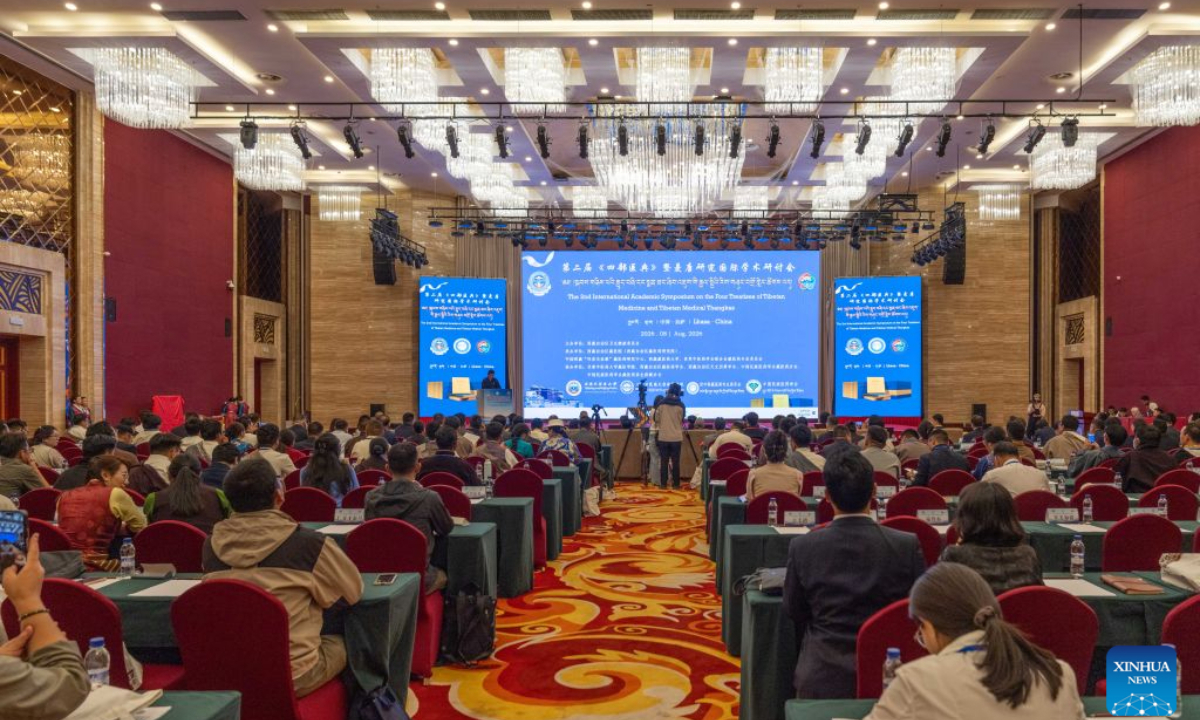
The second international academic symposium on "The Four Treatises of Tibetan Medicine" and Tibetan medical thangkas is held in Lhasa, southwest China's Xizang Autonomous Region, Aug. 20, 2026. An international symposium opened in southwest China's Xizang Autonomous Region on Thursday to shed light on the growing global interest in traditional Tibetan medicine and its visual illustrations drawn on thangkas. Held in the regional capital Lhasa, the second international academic symposium on "The Four Treatises of Tibetan Medicine" and Tibetan medical thangkas brought together more than 200 experts from China, Britain, Germany, Austria, Mongolia and Nepal. Discussions centered on the historical evolution of the classic treatises, the iconographic interpretation of Tibetan medical thangkas, and pathways for modern clinical application and international cooperation. Written between the 8th and 12th centuries, "The Four Treatises of Tibetan Medicine" is the most influential foundational work on traditional Tibetan medicine. It was inscribed on the UNESCO Memory of the World Register in 2023. Based on the work, the 80-scroll Tibetan medical thangkas serve as a visual teaching complement, covering diagnostics, pharmacology, preventive care and medical ethics. The medical thangkas were added to China's national documentary heritage list also in 2023. (Xinhua/Tenzing Nima Qadhup)An international symposium opened in southwest China's Xizang Autonomous Region on Thursday to shed light on the growing global interest in traditional Tibetan medicine and its visual illustrations drawn on thangkas.
Held in the regional capital Lhasa, the second international academic symposium on "The Four Treatises of Tibetan Medicine" and Tibetan medical thangkas brought together more than 200 experts from China, Britain, Germany, Austria, Mongolia and Nepal.
Discussions centered on the historical evolution of the classic treatises, the iconographic interpretation of Tibetan medical thangkas, and pathways for modern clinical application and international cooperation.
At the symposium, a research center for Tibetan medical thangkas was inaugurated.
Written between the 8th and 12th centuries, "The Four Treatises of Tibetan Medicine" is the most influential foundational work on traditional Tibetan medicine. It was inscribed on the UNESCO Memory of the World Register in 2023.
Based on the work, the 80-scroll Tibetan medical thangkas serve as a visual teaching complement, covering diagnostics, pharmacology, preventive care and medical ethics. The medical thangkas were added to China's national documentary heritage list also in 2023.
Among the participants was Katharina Anna Sabernig, a lecturer from the Medical University of Vienna, Austria, who first encountered Tibetan medical murals at Labrang Monastery in Gansu Province in 1994. She later returned and began delving deeper into the works.
"I saw these murals and I started to get deeper and deeper and to understand all this," Sabernig recalled.
Mary Caroline Wyatt, a scholar with dual British-Greek citizenship, began collaborating on an English translation of texts about Tibetan medical thangkas last September. She noted that complete English versions have long been scarce.
"Our translations target professional readers so that we preserve many specialized, traditional terms," said Wyatt.
The event was hosted by the regional health commission and co-organized by the regional Tibetan medicine hospital and Xizang University of Tibetan Medicine.
Xizang has formulated and implemented a series of policies on promoting Tibetan medicine and encouraging innovation. According to a government white paper released last year, the region has 51 public Tibetan medicine institutions, employing 5,287 professionals and operating 3,260 beds, up from 28 institutions, 2,232 professionals and 1,364 beds in 2012.
In April, China rolled out its first national recommended standard for ethnic-medicine disease classification and codes for Tibetan medicine.
Tsering, president of the regional Tibetan medicine hospital, said inscriptions on the UNESCO Memory of the World Register and China's national documentary heritage list have brought Tibetan medicine to a broader global audience.
"We will make the most of these opportunities to promote academic exchanges and clinical collaboration worldwide," Tsering said.
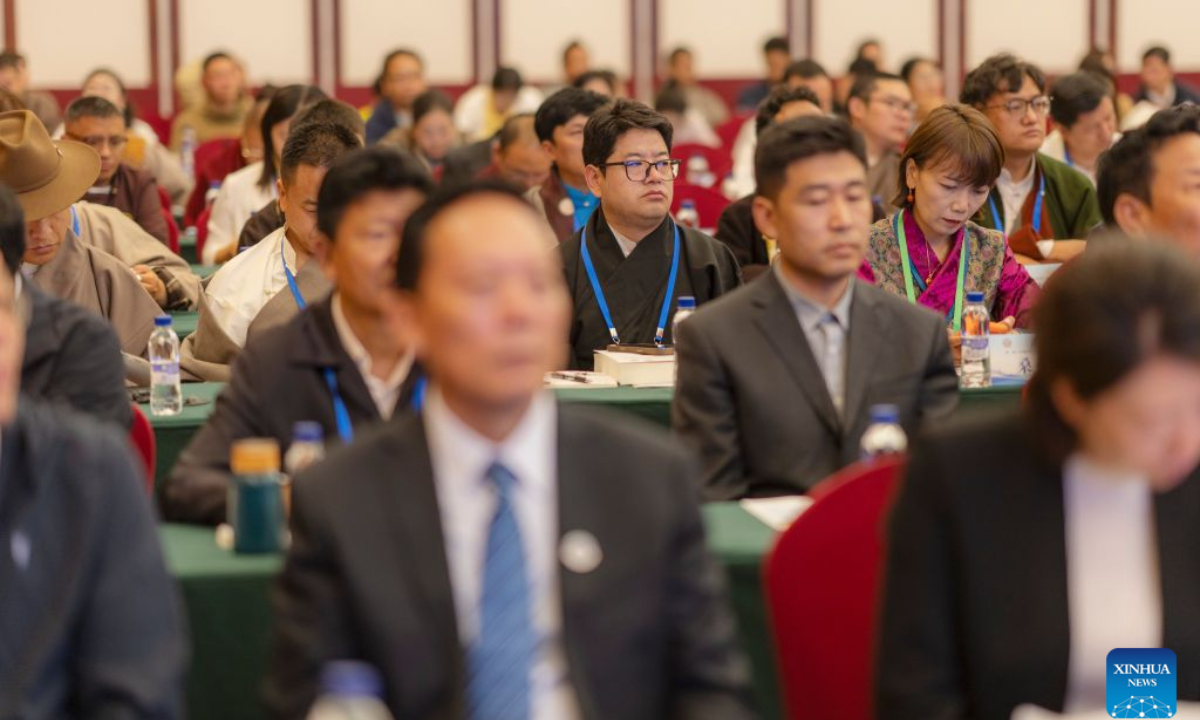
This photo taken on Aug. 20, 2026 shows a scene of the second international academic symposium on "The Four Treatises of Tibetan Medicine" and Tibetan medical thangkas in Lhasa, southwest China's Xizang Autonomous Region. (Xinhua/Liu Zhoupeng)
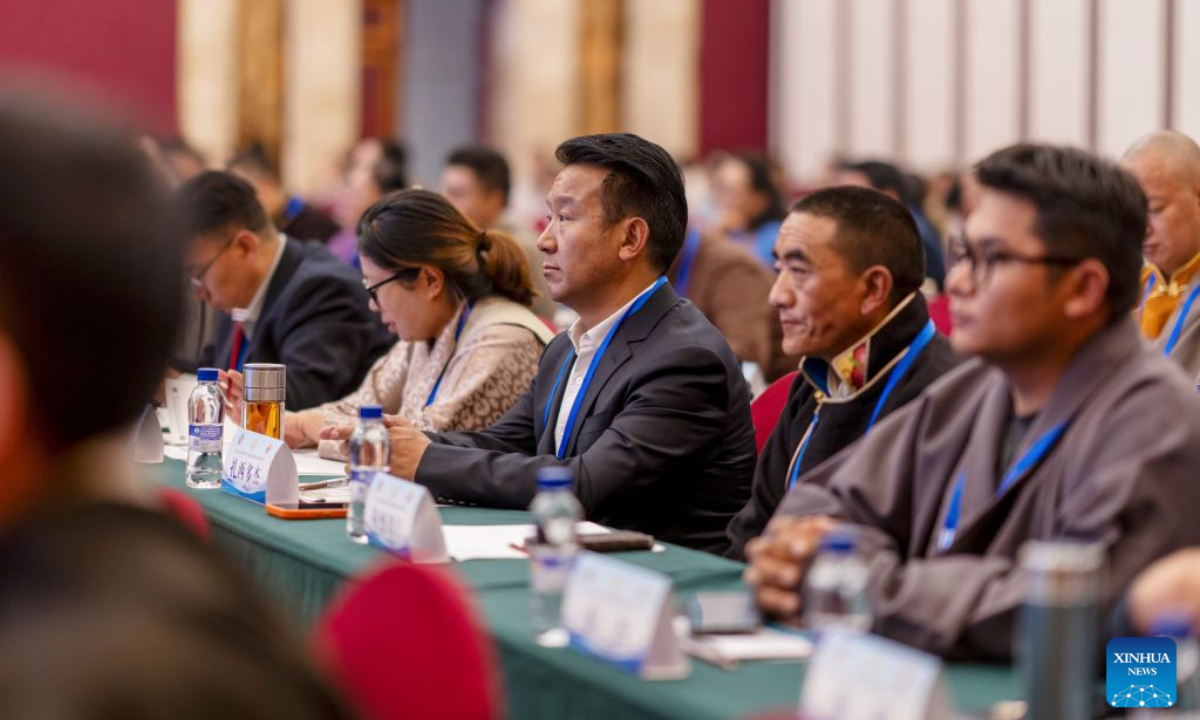
This photo taken on Aug. 20, 2026 shows a scene of the second international academic symposium on "The Four Treatises of Tibetan Medicine" and Tibetan medical thangkas in Lhasa, southwest China's Xizang Autonomous Region. (Xinhua/Tenzing Nima Qadhup)
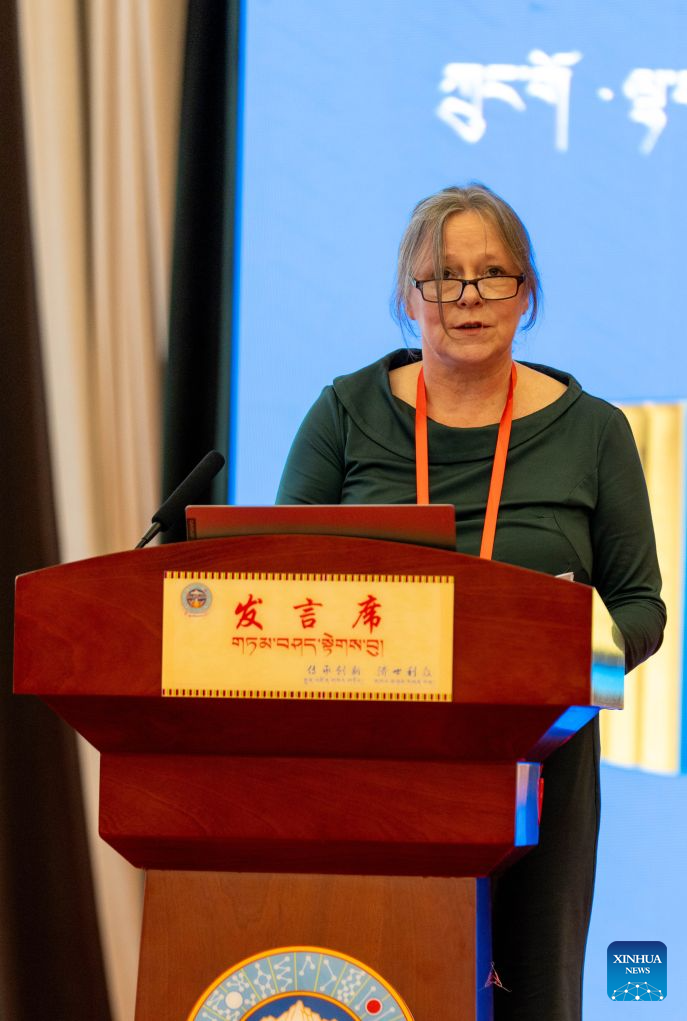
Katharina Anna Sabernig from the Medical University of Vienna, Austria, delivers a speech at the second international academic symposium on "The Four Treatises of Tibetan Medicine" and Tibetan medical thangkas in Lhasa, southwest China's Xizang Autonomous Region, Aug. 20, 2026. (Xinhua/Tenzing Nima Qadhup)
。

B | 太原8月25日电 (魏宇昕 李庭耀)25日,中共山西省委宣传部、山西省人民政府新闻办公室举办开局起步“十五五”系列主题新闻发布会。运城市副市长尚玉良表示,“十五五”期间,运城将坚定不移走好农业高质量发展之路,实施农业“特优”战略,做足做活“土特产”文章,强龙头、补链条、兴业态、树品牌,加快培育农业新质生产力,努力推动现代农业链式发展、集势成群。

C | 运城是山西的农业大市。尚玉良介绍,“十四五”期间,运城建成4个国家级现代农业产业园,市级以上农业产业化龙头企业达到435家,位居全省前列。

D | “十五五”时期,运城将筑牢粮食安全底线、深化“特优农业”发展、做强“工业农业”集群、擦亮“品牌农业”名片、提速“数字农业”建设。 运城将加快高标准农田和水浇地建设,深入实施新一轮千亿斤粮食产能提升行动和粮食单产提升工程,大力推进小麦全产业链发展,持续深化种业振兴行动,力争2030年全市粮食综合生产能力稳定在290万吨以上。 “特优农业”方面,运城将多措并举推进果、菜、畜、渔、药、林等富民特色产业提质增效,加快“三新”果园模式推广和蔬菜老旧设施改造步伐,积极打造畜禽水产、中药材、食用菌和林下经济等新增长极。力争2030年全市蔬菜面积稳定在80万亩以上,肉蛋奶总产量达到86万吨。

E | 围绕“工业农业”。尚玉良表示,运城将坚持外引内培并举,持续延链补链强链,做大做强果品蔬菜、饮品酿品、主食糕点、中药材、肉蛋制品、功能食品、乳品、水产品八大产业集群,建设一批现代农业产业园、农业产业强镇。力争2030年全市国家级龙头企业达到12家,省级龙头企业达到200家。 同时,运城将大力推动品种培优,扩大标准化生产规模,有效推广“运城面粉”“运城苹果”“运城蔬菜”等公用品牌,不断提升“运”字号农产品知名度和影响力。力争2030年全市各类品牌认证总数稳定在400个以上。 依托家庭农场、农民专业合作社等新型经营主体,运城将建设一批数字种植业、数字畜牧业、数字渔业应用推广基地,推动物联网、大数据、人工智能等新一代信息技术与农业生产经营深度融合。尚玉良表示,力争2030年全市农业生产信息化率达到37%以上。

F |
Current article:http://ig9.tichannangenzhuchuapin.cfd/news/20260826_796.html
Published on:16:20:04
 微信
微信 移动端
移动端